Complementary Reimagined: Features and Visual Style
Complementary Reimagined answers a different question from its sibling: not "how realistic can Minecraft look?" but "how good can Minecraft look while staying unmistakably itself?" It is one of the two default styles of Complementary Shaders, made, in the developers' words, to reimagine Minecraft while preserving its unique visual elements. This guide explains what Reimagined changes, what it deliberately refuses to change, and who it suits.
The design goal
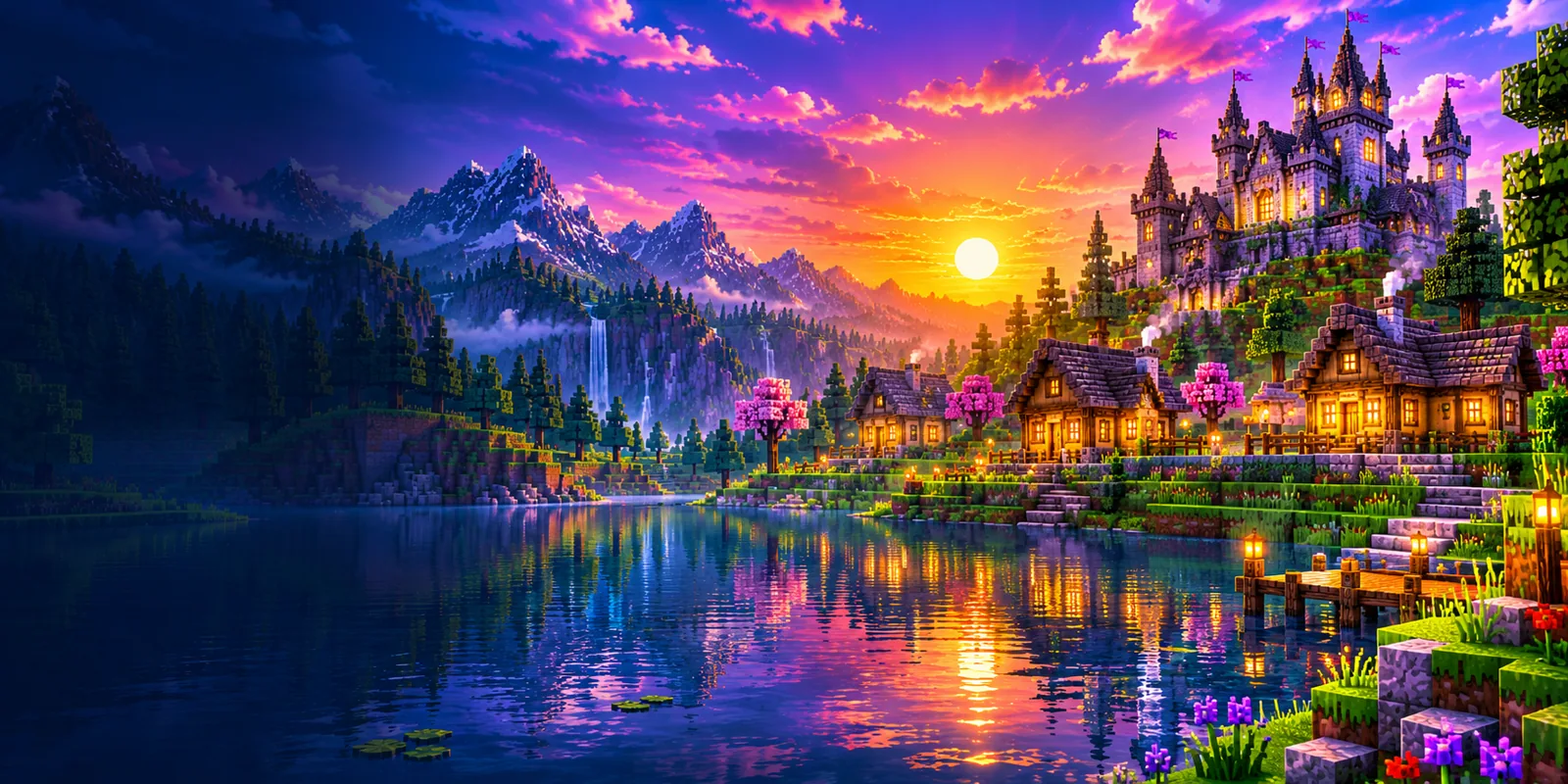
Reimagined treats vanilla Minecraft's look as a design language worth respecting: bold block colours, readable shapes, bright daylight, cheerful water. The pack then upgrades the rendering underneath that language, real shadows, reflective water, a living sky, better light, so the world feels richer without ever feeling replaced. It is the most downloaded style on the project's Modrinth listing, which suggests a great many players want exactly this balance.
Lighting: brighter, cleaner, helpful
- Daylight that stays open. Scenes are bright and evenly lit, with colour saturation kept lively. Builds read clearly at any hour.
- Shadows that ground, not swallow. Objects gain depth and contact with the world, but shadowed areas remain readable, you can work in your own builds' shade.
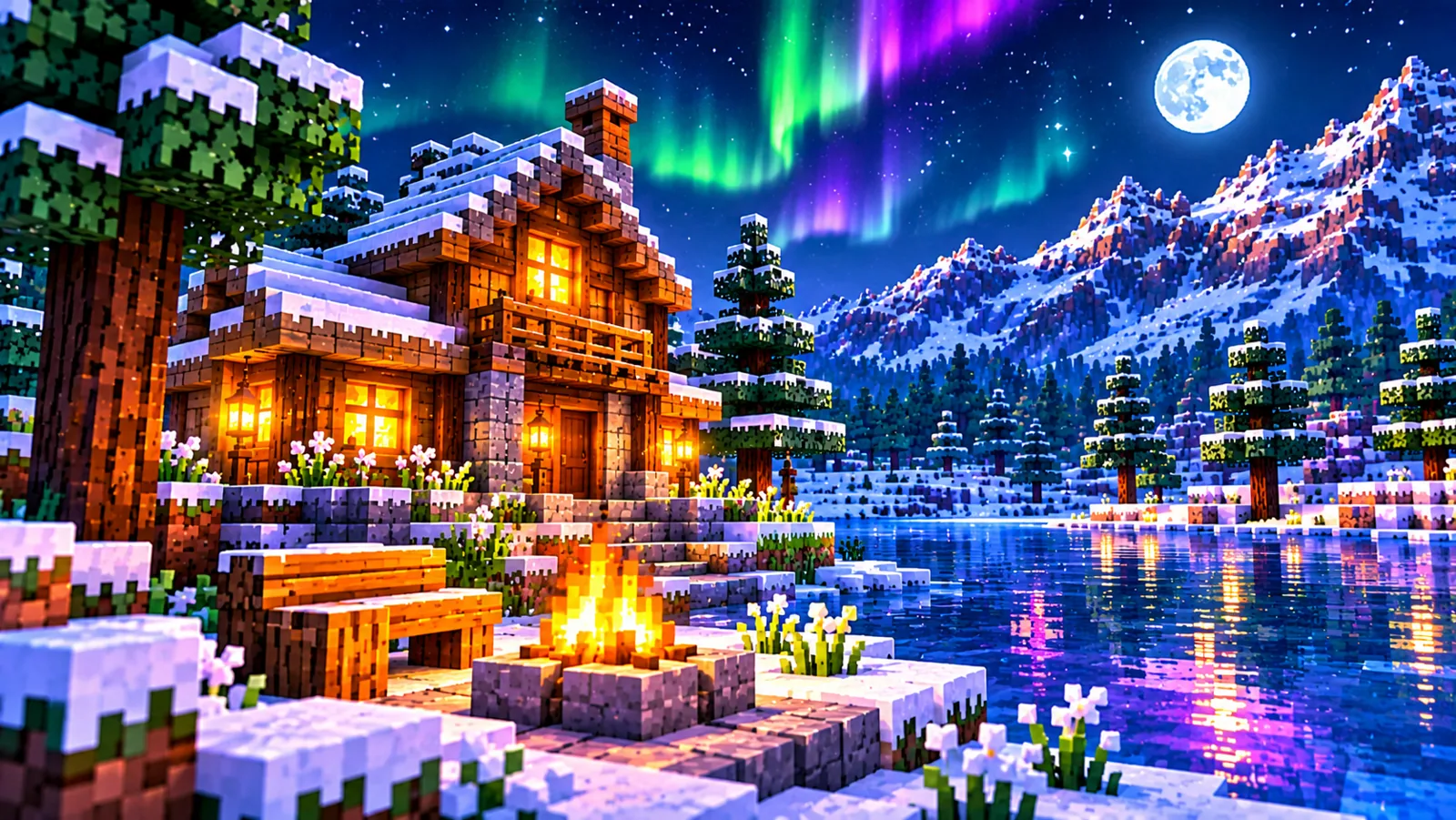
- Nights you can play in. Night is visibly night, with mood and contrast, but exploration does not demand constant torch spam to remain practical.
Fine-tuning lives in lighting and shadow settings.
Sky and water
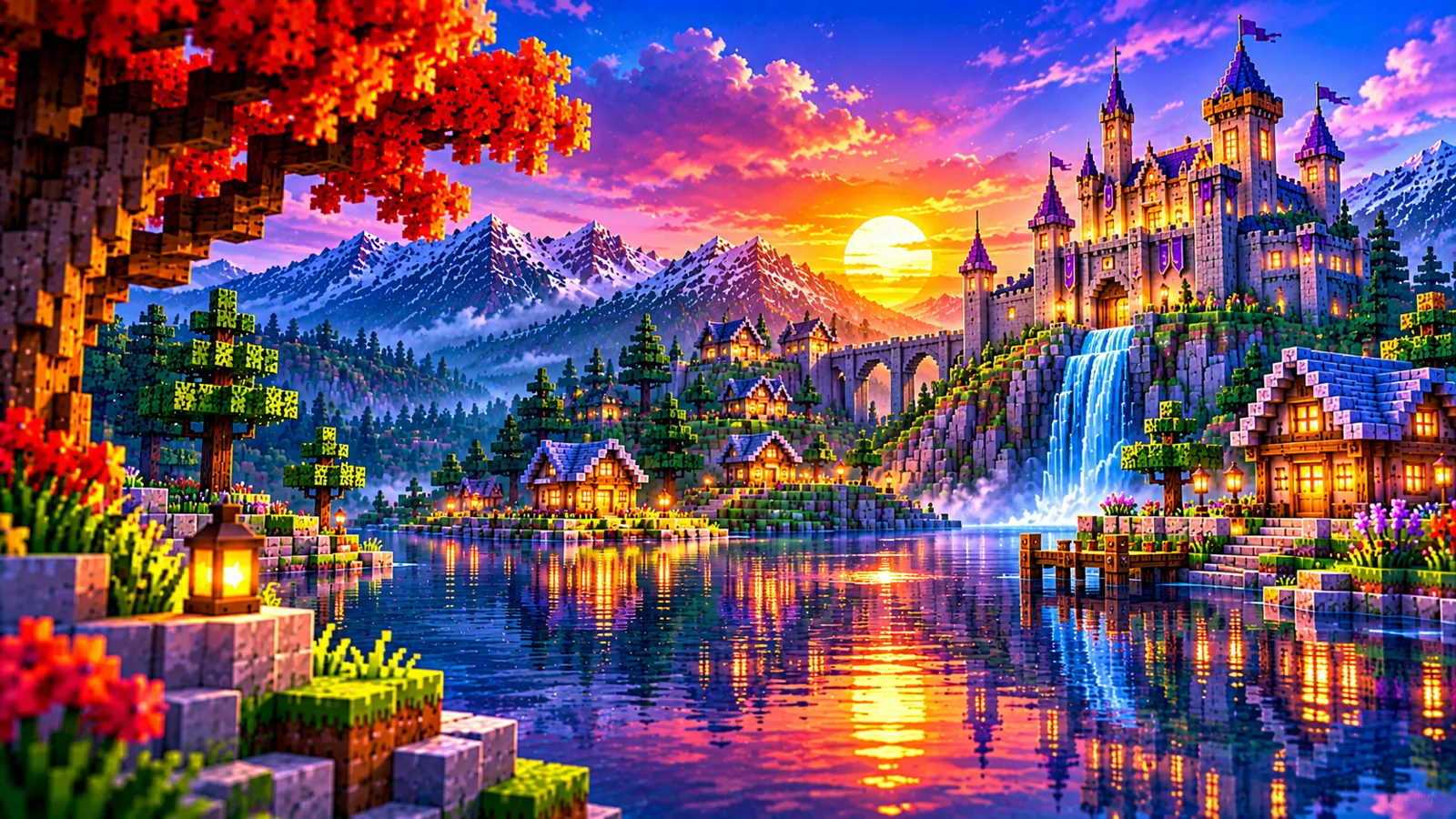
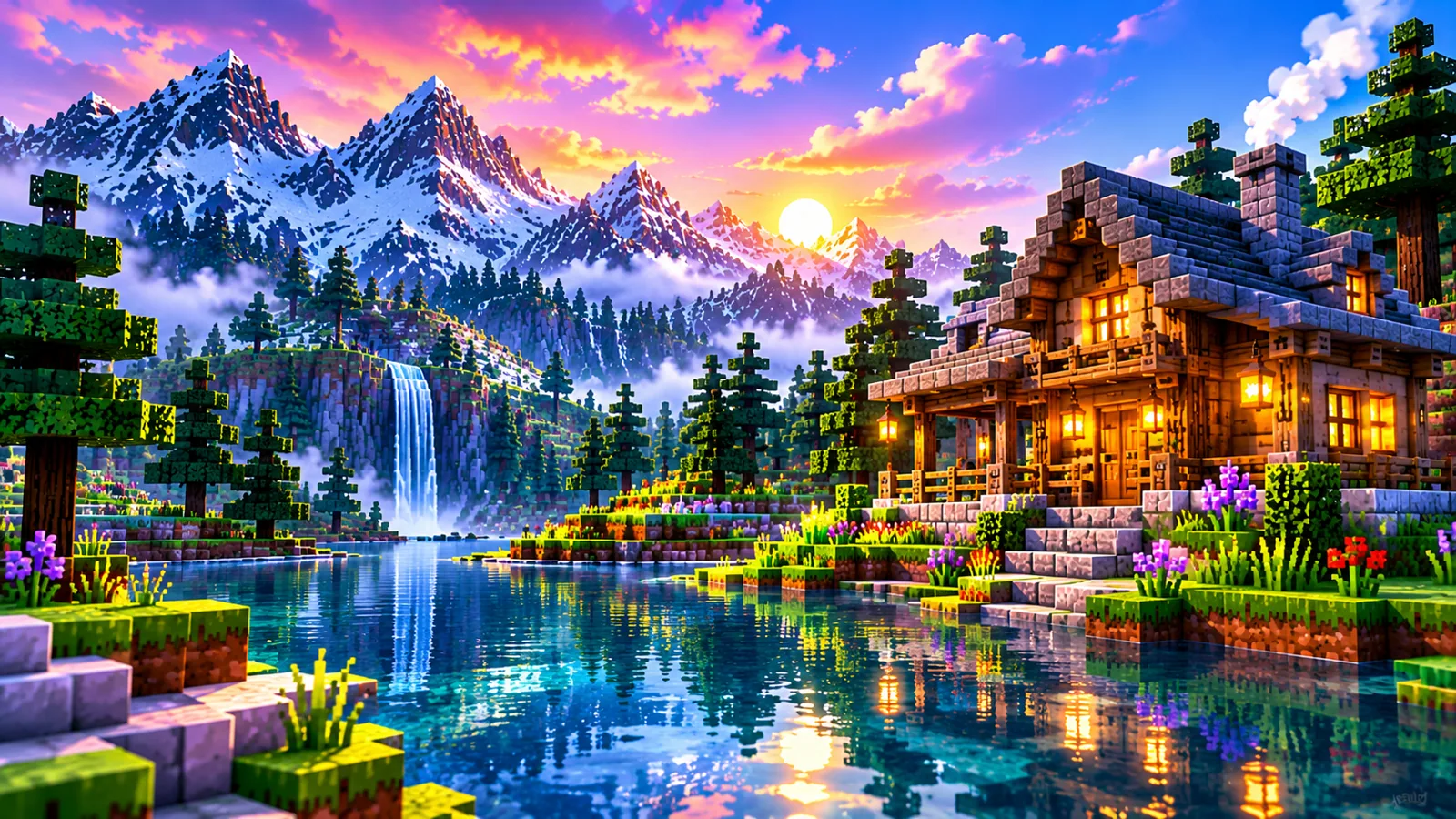
Reimagined's sky is clean and graphic in the best sense, colours and clouds chosen to sit naturally above a blocky landscape, with pleasant sunrises and sunsets that warm a scene without grading it like a film. Its water is the other signature: clear, bright and inviting, reflective enough to feel alive, coloured closely enough to vanilla that lakes still feel like Minecraft lakes. Coastal and garden builds benefit enormously. Options for both are in clouds and atmosphere settings and water and reflection settings.
Blocks stay themselves
Complementary applies custom effects to almost every block in the game, and in Reimagined those effects are tuned for legibility: ores read as ores at a glance, crops show their state, redstone lines stay traceable, storage rooms remain scannable. For technical players, farmers and large-base builders, this is not a small thing, a shader that makes your world prettier but harder to read is a shader you eventually switch off. Reimagined is designed to be the one you leave on.
Built for long sessions and shared worlds
Reimagined's restraint pays off over time. Eye strain is low, screenshots of builds are true to their block choices (useful when sharing designs), and multiplayer sessions look consistent and clear for everyone using it. Streamers and video makers who want an enhanced-but-faithful look, so viewers recognise the game instantly, tend to land here as well.
Performance character
Reimagined uses the same profiles (Potato to Ultra) and settings system as Unbound. Its cleaner look tends to feel comfortable at a given profile, and its daylight readability means you are less tempted to push effects just to see. As always, your hardware and render distance dominate; the performance guide shows how to verify your own frame rates rather than trusting anyone's chart.
Reimagined across biomes and build types
Reimagined's clarity is easiest to appreciate in places where vanilla Minecraft is busiest. In a jungle, where layers of leaves and vines can turn into visual noise, its even daylight and readable shadows keep paths, structures and drops distinguishable, so exploring on foot stays practical. In a desert or snowfield, where a single pale palette dominates, its saturated colour and clean shadow work stop the terrain from washing out, a sandstone village or a spruce cabin in snow still reads as a collection of distinct blocks and shapes rather than a bright blur. On the coast, its clearer water keeps the boundary between land, shallow and deep water easy to judge, which matters when you are building docks, bridges and harbours block by block.
Build type matters as much as biome. Large, detailed builds, castles with many small features, towns with mixed materials, gardens with varied planting, benefit from light that shows everything evenly instead of spotlighting one face and hiding another. Interior-heavy builds benefit even more: a furnished house, a library or a storage hall in Reimagined looks finished at any hour, because no corner is lost to shadow. Where a cinematic style rewards a few dramatic viewpoints, Reimagined rewards the whole build, from every angle, all day. That consistency is why it photographs floor plans, progress updates and build guides so well: what the picture shows is what a visitor will actually see.
Underground, the same philosophy continues. Mines, cave bases and underground farms stay workable places rather than expeditions, because light falls off gently and unlit edges remain visible enough to navigate by. Players who run large underground projects, the kind measured in weeks, not minutes, tend to value this more than any surface effect.
Why readability matters over hundreds of hours
A shader is not judged in the first ten minutes; it is judged in the two-hundredth hour, when the novelty has gone and only usability remains. Reimagined is designed for that timescale. Because block identity is preserved, Complementary applies custom effects to almost every block, but in this style those effects are tuned to keep each block recognisable, long-term projects stay manageable. You can return to a farm after a month and still read its crop stages at a glance. You can expand a redstone system and still trace its lines. You can sort a storage room without moving closer to every chest.
There is a social side to this as well. In multiplayer, where several people build in the same world with different tastes and different hardware, a clear shared look reduces friction: a design shown to a friend looks the same when they walk over to see it, instructions like "the oak section by the blue roof" actually work, and collaborative builds stay coherent. Reimagined does not demand that everyone use it, shaders are client-side, and each player chooses their own view, but worlds designed and photographed in Reimagined translate most faithfully to whatever the other players are using, including vanilla.
None of this means Reimagined is plain. Its sky, water, shadows and per-block effects are a substantial upgrade over the base game, and sunsets in a well-chosen spot are genuinely beautiful. The point is that its beauty is in service of the game rather than in competition with it, which is why so many players install it once and simply leave it on.
Screenshots and video that stay true to the build
Creators who teach, document or showcase builds often prefer Reimagined for a practical reason: fidelity. A screenshot taken in Reimagined communicates block choices, proportions and colour honestly, so a viewer can recreate the design or judge it fairly. Tutorial videos benefit for the same reason, steps remain visible, the work area stays lit, and the footage does not alternate between bright exteriors and murky interiors as the presenter moves around. For world tours and server showcases, that consistency reads as professionalism: the world looks enhanced, but never disguised.
If your goal is the opposite, atmosphere first, information second, the sibling style is the better tool, and the full comparison shows where each one wins. Many players keep Reimagined as their everyday view and load Unbound only for a dedicated photo session, which is easy because both styles can live in the same folder with separate settings.
Frequently asked questions
Is Reimagined just vanilla with shadows?
No, it is a full shader pack: dynamic lighting and shadows, reflective water, an animated sky, atmospheric depth and per-block effects. It simply directs all of that at enhancing the game's own look rather than replacing it. Get it via the Reimagined download guide.
Can Reimagined be made more cinematic?
Partly. The shared settings system lets you push atmosphere, water and lighting toward a moodier result. But if cinematic realism is the goal itself, Unbound starts where you are trying to go, see the comparison.
Is Reimagined better for low-end PCs?
Both styles offer the Potato profile for weak hardware. Reimagined's style tends to be the more comfortable experience at low settings because its look depends less on heavy atmosphere. See low-end PC settings.